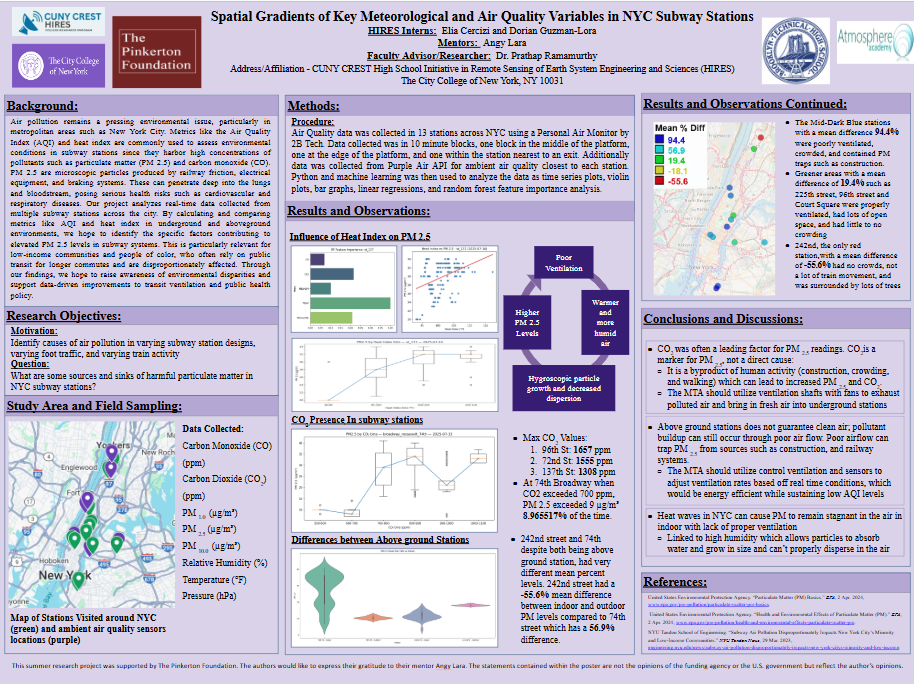
The CUNY CREST High School Initiative in Remote Sensing of Earth Systems Engineering and Science (HIRES) engages students in hands-on, inquiry-driven research that addresses real-world environmental and engineering challenges. Guided by dedicated faculty researchers, graduate student mentors, and scientific professionals, students gain early exposure to authentic research while developing critical thinking, analytical, and communication skills.
HIRES research reflects the diversity of environmental challenges facing urban and coastal communities. Student projects span a wide range of topics, from air quality monitoring and urban heat island analysis to water quality assessment, biodiversity studies, and green infrastructure. Other projects explore coastal resilience, coastline and living shoreline monitoring, stormwater management, and nature-based solutions that help communities adapt to climate change.
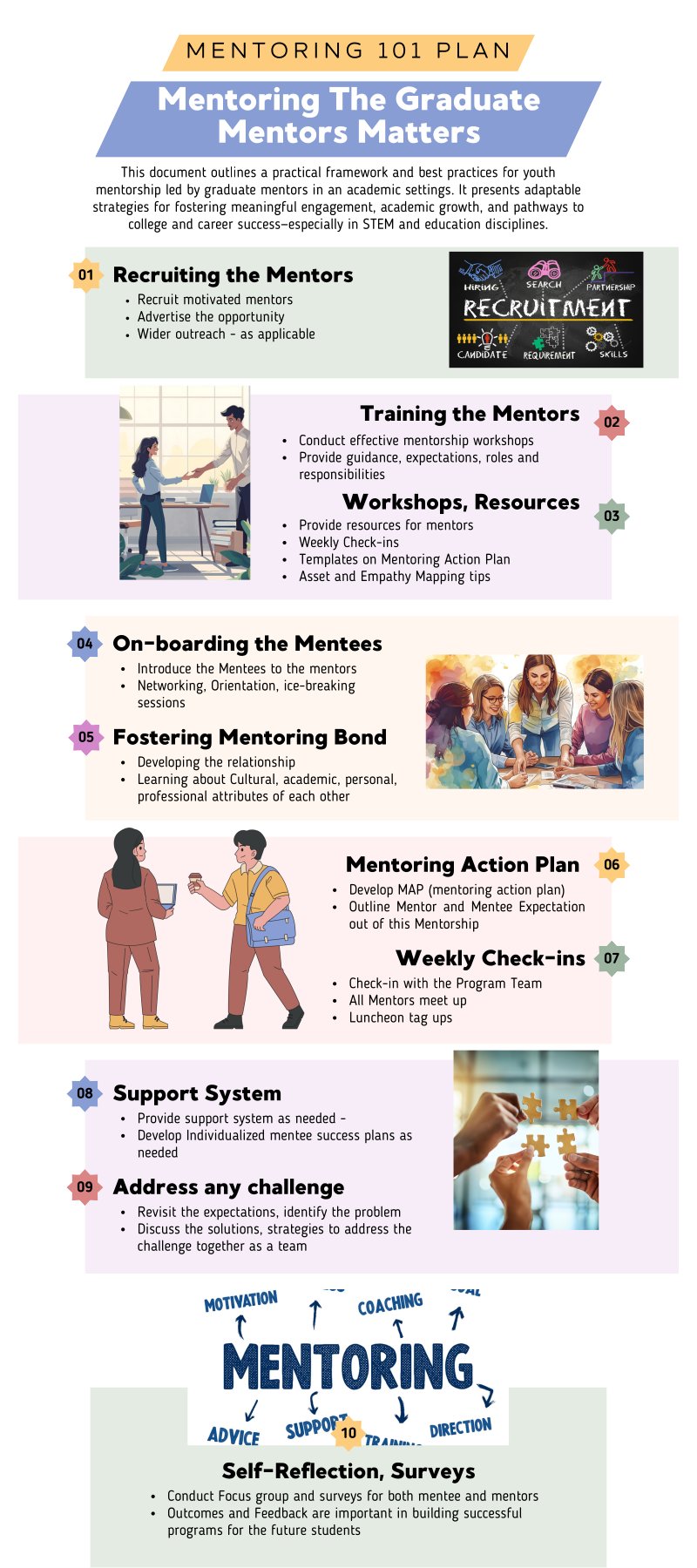
A defining feature of the program is its strong mentoring model, where high school students work closely with CUNY CREST faculty and graduate mentors who provide guidance in research design, data analysis, and scientific communication. These mentoring relationships create a supportive learning environment where students are encouraged to ask questions, develop confidence, and see themselves as emerging scientists and engineers.
Through collaborative research teams, students learn to formulate research questions, analyze environmental datasets, and present their findings through posters, presentations, and digital storytelling platforms such as StoryMaps. By integrating mentorship, interdisciplinary research, and real-world environmental applications, the HIRES program builds a strong pipeline of diverse future scientists, engineers, and environmental leaders committed to advancing sustainable and resilient communities.