The Deliver, Dialogue, Discuss, and Discourse (D4) Series at CREST
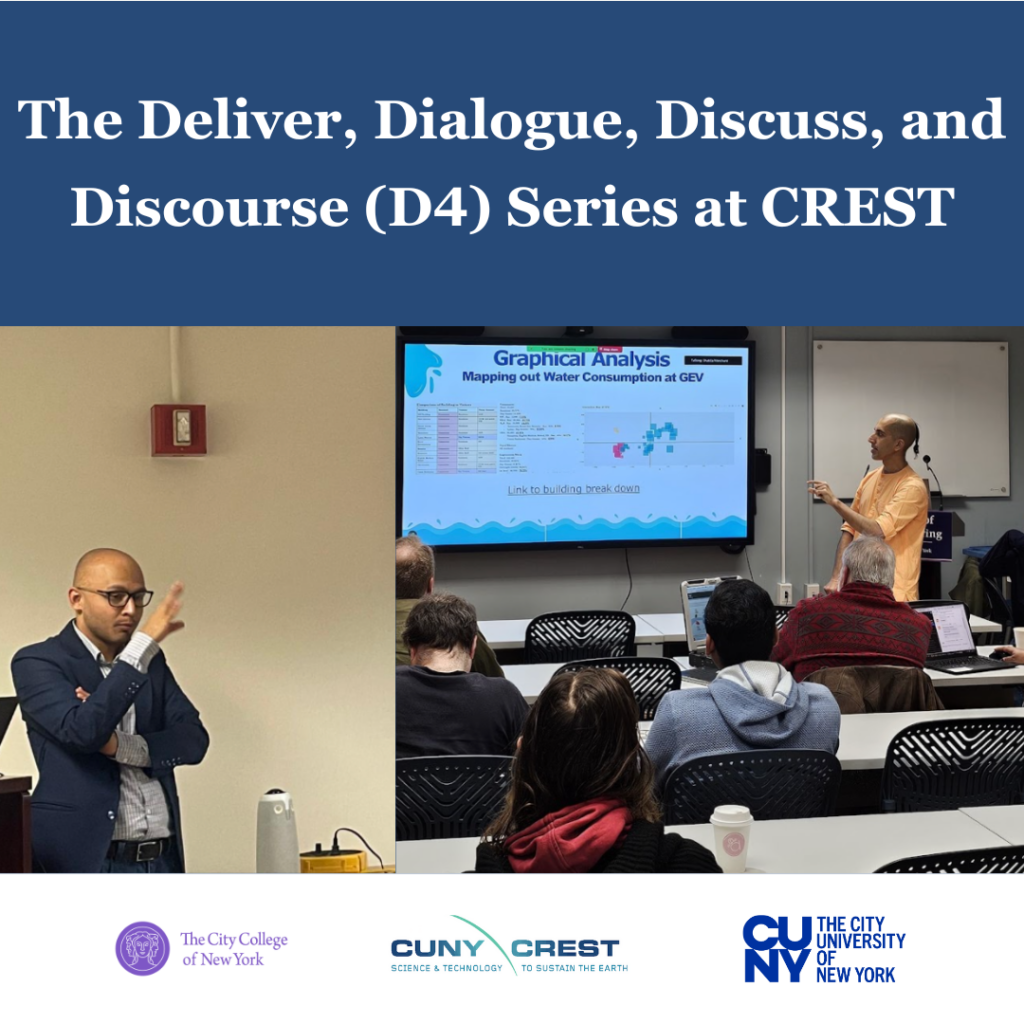
CREST continued its Deliver, Dialogue, Discuss, and Discourse (D4) Series in November 2025 at the City College of New York with two engaging seminars that bridged cutting-edge research, entrepreneurship, and sustainable engineering.
Bridging Research and Entrepreneurship: Pathways from University Innovation to the Startup World
On November 13, 2025, CREST welcomed Asmod Karki, Head of Global Strategy at FedTech, who led an interactive seminar exploring the evolving landscape of innovation and entrepreneurship. Drawing on his extensive experience at FedTech, a global leader in deep tech commercialization, Asmod discussed how students, researchers, and technologists can navigate the journey from university research to launching impactful startups.
The session highlighted the critical role of innovation ecosystems like FedTech in enabling technologies to move from labs to markets, and how universities can support startups through mentorship, partnerships, and strategic resources. Attendees learned about diverse career opportunities in the startup world and practical pathways to build meaningful careers in deep tech entrepreneurship. The seminar was held in person at Steinman Hall, CCNY, and virtually, drawing a wide community of researchers, educators, policymakers, and entrepreneurs engaged in sustainability and environmental innovation.
Engineering Sustainability: India’s Govardhan EcoVillage as a Global Model for UN Sustainability Goals
The November 21, 2025 seminar spotlighted Govardhan EcoVillage (GEV), an award-winning rural sustainability initiative in Maharashtra, India, offering a compelling case study for integrated engineering solutions aligned with the United Nations Sustainable Development Goals (SDGs). The session, led by Guru Mohanvilas Das, Sustainability Director at GEV, engaged students, faculty, and researchers in exploring how holistic engineering approaches can foster resilient, regenerative communities.
Guru Mohanvilas Das emphasized the need for engineers to embrace systems thinking that integrates water, energy, agriculture, waste, and materials management with ecological stewardship. Participants examined GEV’s suite of engineering projects, including solar microgrids, biogas systems, rainwater harvesting, natural wastewater treatment, organic farming, and earth-based sustainable building techniques. These innovations contribute to multiple SDGs, including Clean Water and Sanitation (SDG 6), Affordable and Clean Energy (SDG 7), Responsible Consumption and Production (SDG 12), Climate Action (SDG 13), Life on Land (SDG 15), and Quality Education (SDG 4).
The seminar reinforced CREST’s commitment to training future leaders in sustainable engineering and fostering cross-sector collaboration for resilient communities.